

The idea
“An idea is nothing more nor less than a new combination of old elements.” James Webb Young
Implementing research papers can sometimes work, though a perfect replication often fails. It’s never wasted effort, though: the ideas in the paper end up feeding new ideas and good conversations with other researchers.
Here’s the 3rd edition of the Quantitativo weekly, featuring papers that caught my eye over the past week. Enjoy!
2.13% a month. A t-stat of 9.21. And not one new signal.
This paper doesn’t hunt for another anomaly. It asks the sharper question: when does each anomaly actually deserve your capital?
Takes 212 known anomalies and groups them into 8 economic families (value, momentum, quality, liquidity…),
Uses macro-regime memory to decide which family gets capital in each market state,
Earns 2.13%/month, Sharpe 1.51 (t = 9.21) purely by reallocating, not discovering,
The kicker: the Liquidity/Limits family pays +1.41%/month in calm markets and flips to 1.79% in trending ones, exactly where arbitrage capital dries up.
The lesson: an anomaly’s value isn’t fixed. It’s state-dependent, and the macro regime tells you when to hold it.
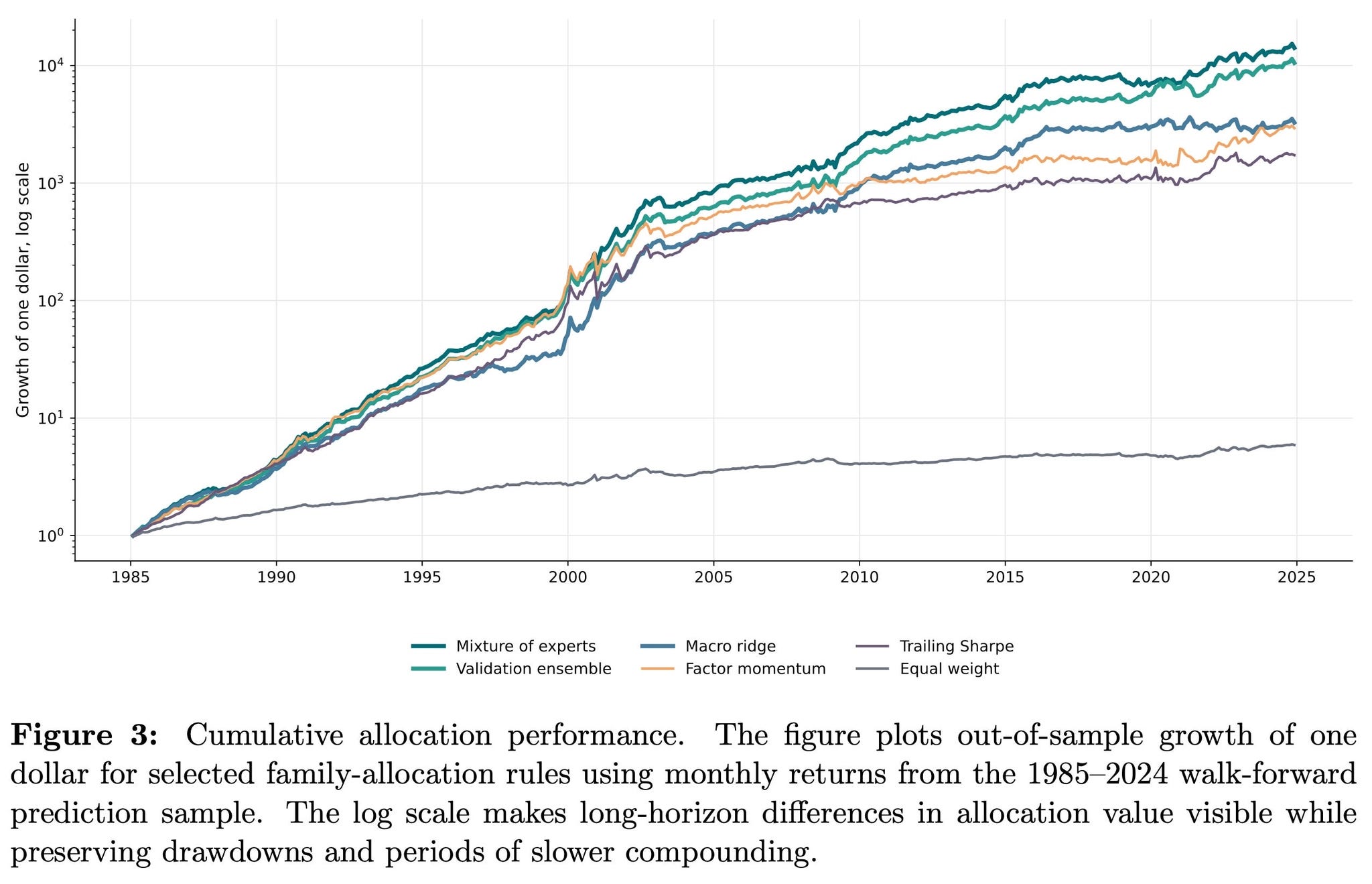
When Do Anomalies Deserve Capital? by Nima Taheri Hosseinkhani (2026)
3,636 funds. 33 years of holdings. Skilled managers time the value factor with a t-stat of 3.99! (…but can’t time momentum at all).
New paper builds a beautifully simple signal: the Fund Skill Gap (FSG).
Take the top-decile “skilled” funds. Take the bottom-decile ones. Compute the difference in factor exposure of what they hold. That’s it. No forecasts, no surveys, just the spread in portfolio tilts.
That spread predicts next month’s factor returns:
Value (HML): corr 0.30, coefficient t = 3.99. The strongest and most robust result in the paper.
Investment & profitability: weaker, but there.
Momentum: nothing. Signs flip, nothing clears the noise.
Predictability lives almost entirely in growth funds: the mandates with room to actually express a view. Cap-targeted funds show zero.
Drop the highest- and lowest-flow funds, and it gets stronger → it’s information, not flow-induced price pressure.
The punchline: everything we call “manager skill” (active share, industry concentration, value added) is largely fundamentals-driven factor timing, not stock-picking magic.
The honest caveat: this is in-sample, and the main signal uses quarter-end holdings that arrive with a reporting lag. But the appendix builds the same signal from daily fund returns, and value and size still come through. That version is computable in real time.
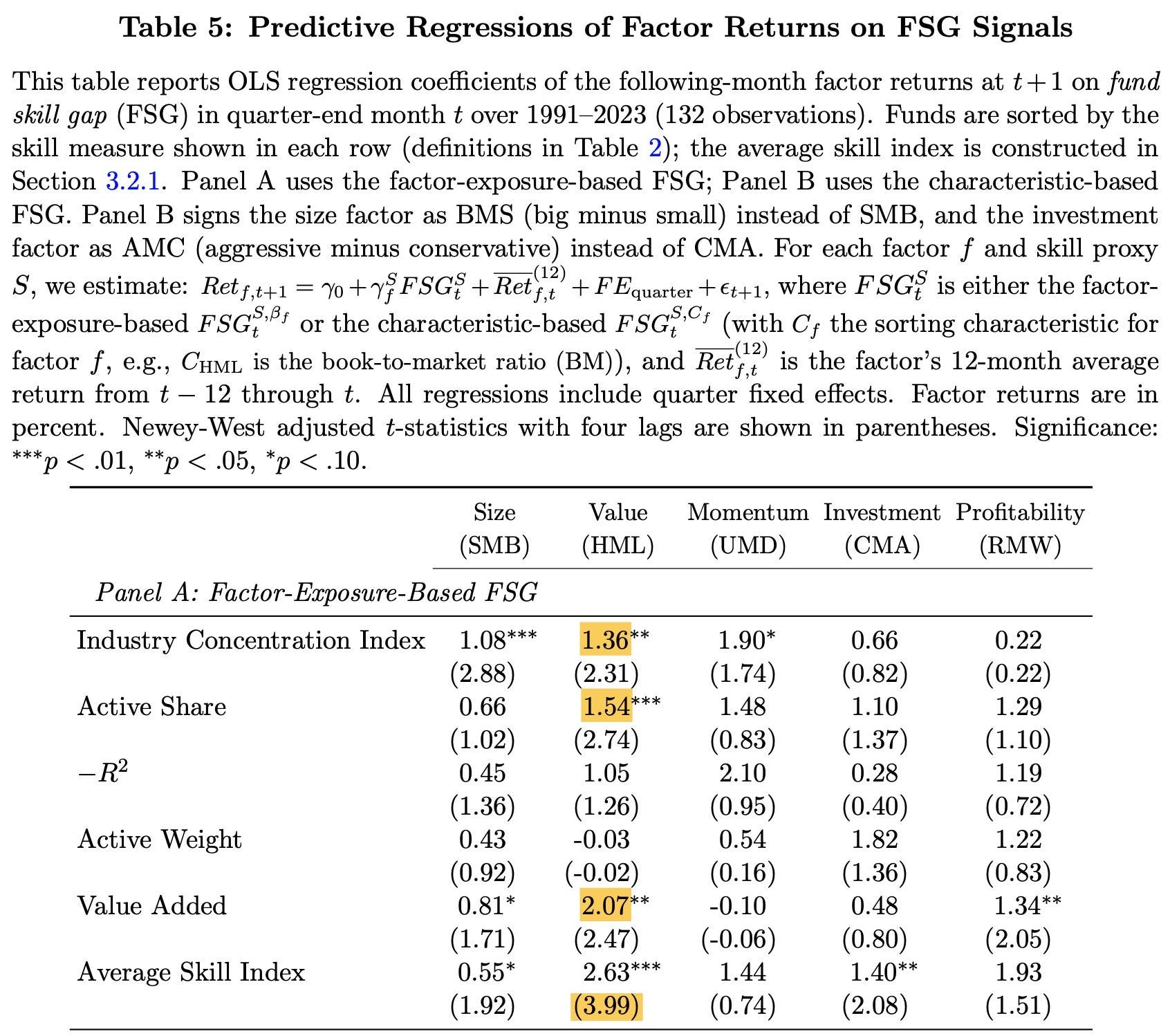
Factor Timing: Evidence from Mutual Fund Skill, by Chen, Jacoby, Lu, Xia (2025)
5.6% → 15.9% a year. Sharpe 0.30 → 0.82. Nothing changed except the smoother.
And the winning smoother is an image-processing algorithm from 1990.
A new paper builds a U.S. sector-rotation strategy (9 SPDR sector ETFs, one long-only pick a month) based on four public signals: VIX, Russell 2000/S&P 500, discretionary/staples, and financials/utilities. Then it holds the portfolio rule fixed and swaps in six real-time, one-sided filters.
Raw signal: 5.6% / 0.304 Sharpe
Kalman 8.9% · HP 9.7% · LOESS 12.5%
Savitzky-Golay: 13.8% / 0.707
Perona-Malik anisotropic diffusion (yes, the edge-detection filter): 15.9% / 0.820
Why it works: edge-preserving filters smooth inside a regime but keep the jumps between regimes. Perona-Malik halves regime switches (3.0 → 1.8/yr), nearly halves turnover (8.2× → 4.4×), and leaves 82% of months with zero trades.
The honest part: against a boring equal-weight sector portfolio (10.6% / 0.739), the edge is real but only marginal (t = 1.8). The author says so out loud — and reports White RC, SPA, Deflated Sharpe and PBO to prove it.
The takeaway: the filter is part of the model, not preprocessing.
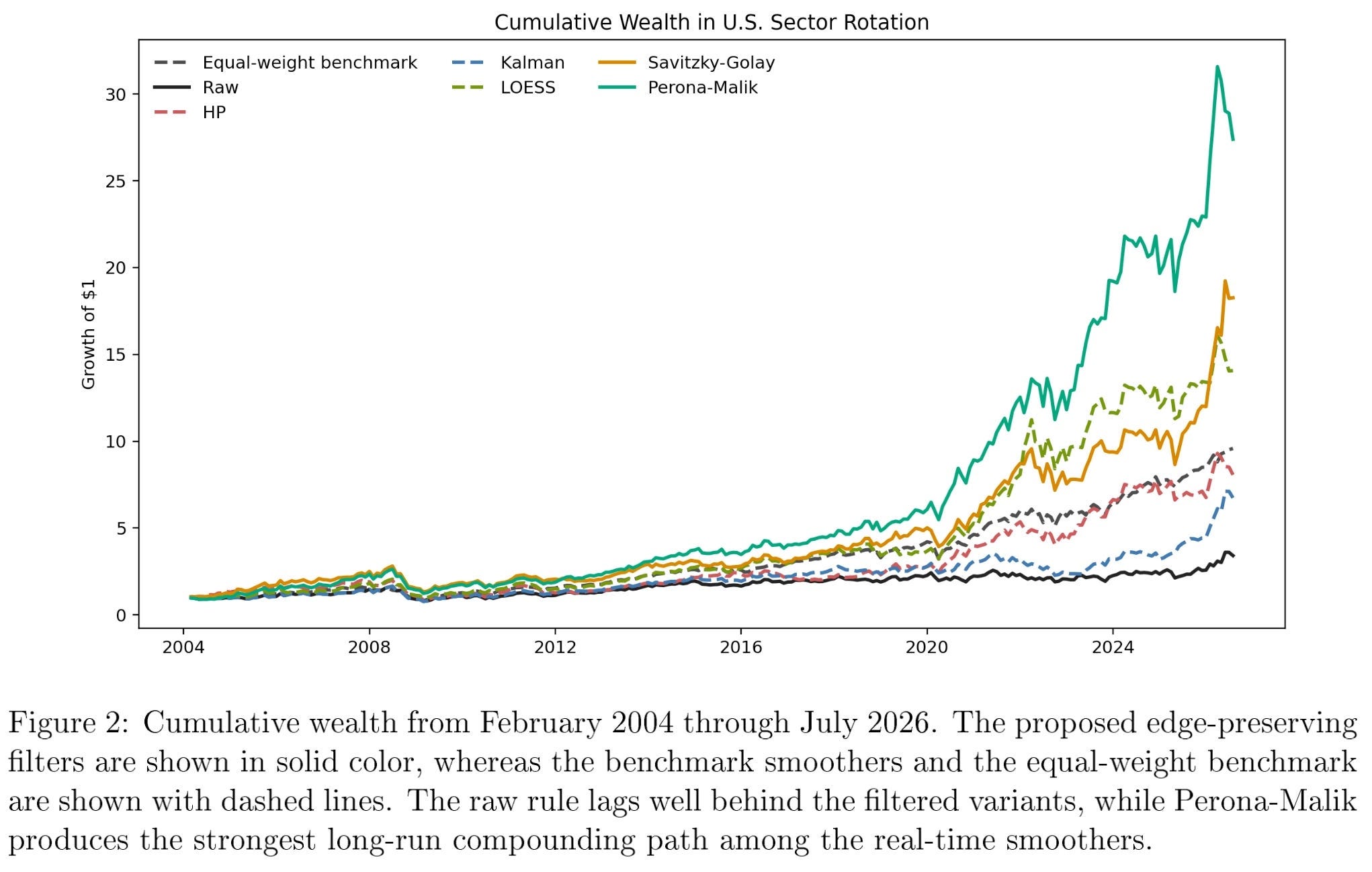
Edge-Preserving Macro-Financial Signal Extraction for Real-Time U.S. Sector Rotation, by Marc Weibel (2026)
~40 trades a year. A Sharpe up to 2.8. The only signal: whether the market rose or fell on macro-news day.
A new paper shows that investors’ appetite for lottery-type stocks (high-skew, high-vol, low-price “jackpot” names) gets switched on and off by the content of macroeconomic news.
When the market rises on a macro-news day (FOMC, jobs, PMI, PCE), demand for lottery stocks jumps, and prices drift up for days. When it falls, they drop. Predictably.
Long-positive / short-negative on the top lottery decile → ~45-52 bps abnormal return per window, Sharpe up to 2.8.
Strongest on FOMC days, for firms with no earnings of their own, and in high-sentiment periods.
Not retail hype, not high beta… It’s information-driven comovement: investors price opaque stocks off the one signal everyone shares (the market’s move).
Fades fast: gone after ~5 days.
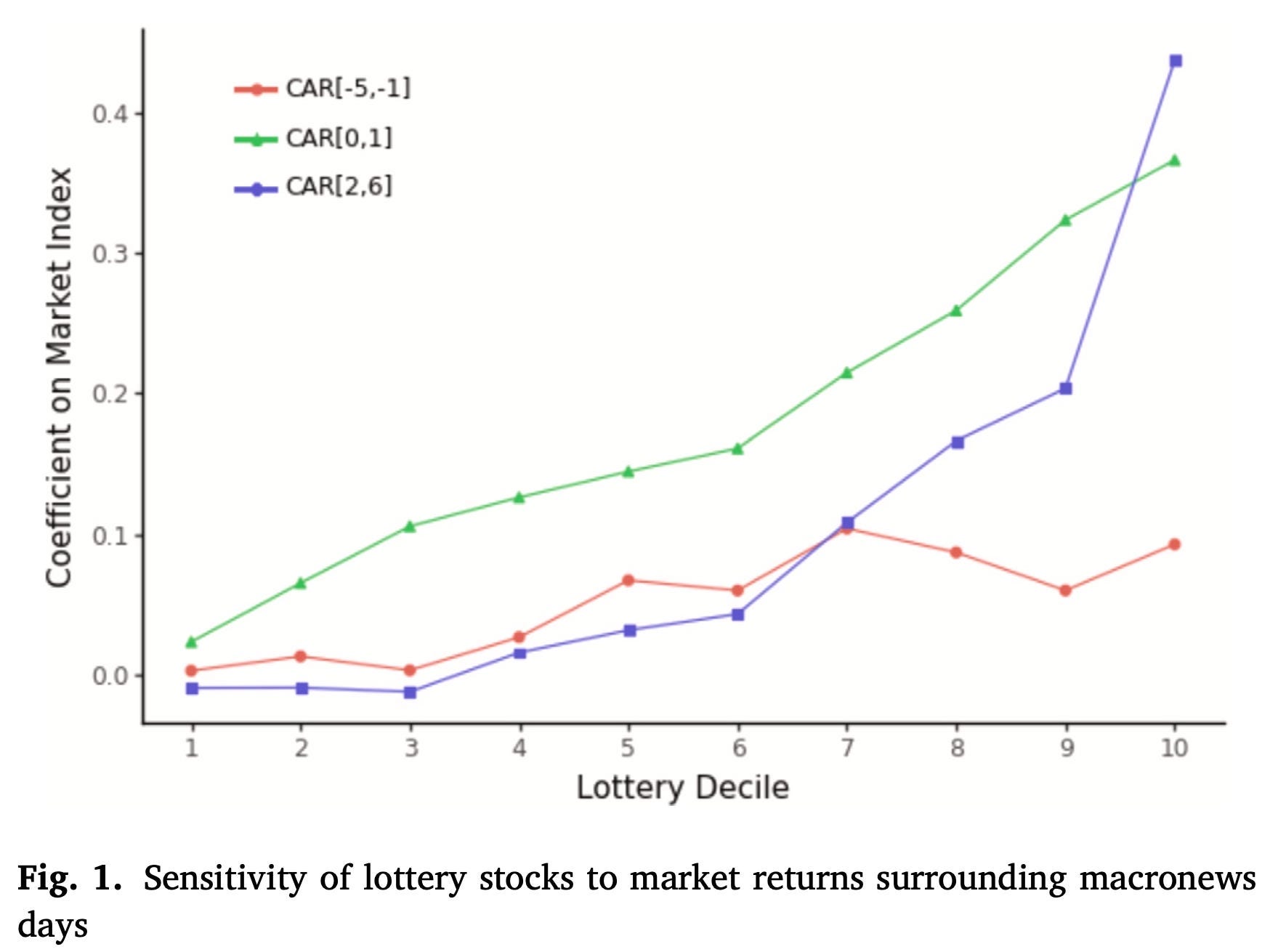
Conditional Demand for Lottery-Type Stocks: Information Spillovers and Asset Prices Comovement by Zhang, Kappou & Urquhart (2026)
9 out of 9 U.S. mega-caps called correctly, with ZERO machine learning.
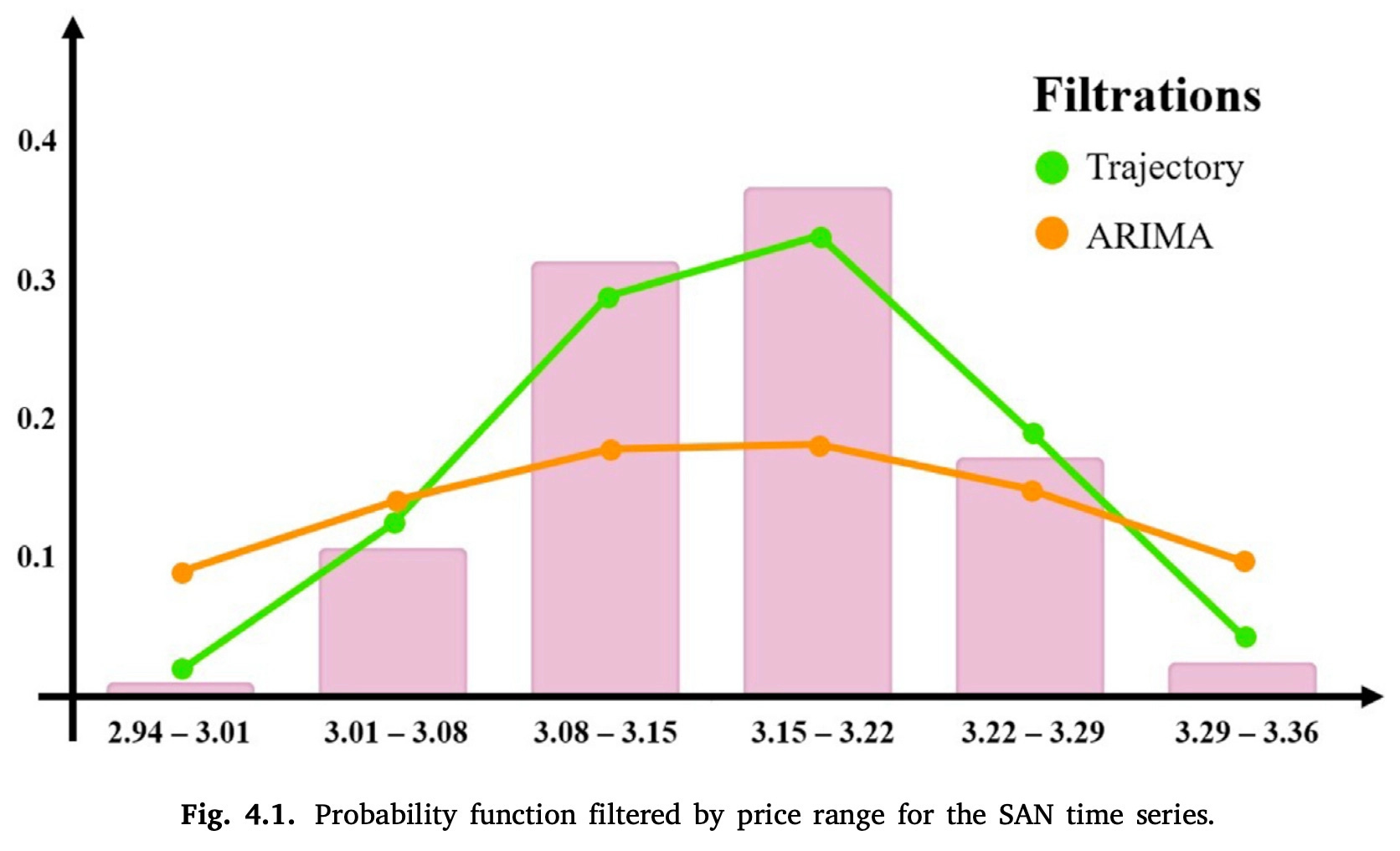
A new paper forecasts short-term stock trends (direction, not price) by fusing two probability spaces into one:
An ARIMA model → a normal distribution around each forecasted price,
A parameterized random walk → a binomial distribution over where price can land,
Stitched together via a filtration (two σ-algebras) into a single “filtered” probability.
The call is elegantly simple: if the two most-likely price zones sit side by side and the higher one wins, it’s bullish — flip it for bearish, call it undecidable if they tie.
Across 25 assets in 4 markets: 62.5% directional accuracy overall and a perfect 100% on U.S. large caps (AAPL, AMZN, GOOGL, TSLA…).
A novel predictive analytics model for forecasting short-term trends in equity asset prices by Achury-Calderón, Arredondo & Sánchez Ascanio (2025)
As always, I’d love to hear your thoughts. Feel free to reach out via Twitter or email if you have questions, ideas, or feedback.
Cheers!
I think you got the paper link wrong for the "~40 trades a year. A Sharpe up to 2.8. The only signal: whether the market rose or fell on macro-news day." one